Wie lange schlafen Babys und Kinder - Schlafbedarf, Schlafdauer und Schlaftabelle

How Long Do Babies and Kids Sleep? Sleep Needs, Sleep Duration and a Sleep Chart

Healthy sleep is essential for babies and children. It supports physical and mental development, strengthens the immune system and helps them process the many impressions of the day. But how much sleep does a child really need, and when is the right time for bed?

Why sleep matters so much for babies and children

Sleep is much more than simply resting. While children sleep, many developmental processes are at work: growth hormones are released, the brain consolidates what it has learned and the body recovers. Especially in the first years of life, enough sleep has a major influence on the healthy development of children and teenagers.

Lack of sleep, on the other hand, can lead to irritability, trouble concentrating and weaker immune defenses. With an ongoing sleep deficit, effects on metabolism, memory and emotional stability can even show up. Children who regularly sleep too little often seem wound up, a typical sign of too little sleep that parents can easily mistake for excess energy.

How much sleep babies and children need by age

How much sleep a child needs depends heavily on age. Infants sleep much longer than toddlers or school-age children. As children mature, their sleep rhythm becomes more stable and their sleep times adjust more and more to the day-night rhythm.

Age Average sleep duration Typical pattern
Newborns (0-3 months) 16-18 hours Spread evenly across day and night
3-6 months 14-15 hours Longer stretches of night sleep begin; 3-4 naps
6-12 months 13-14 hours 2-3 naps
1-2 years 12-13 hours 1-2 naps
3-5 years 11-12 hours usually just 1 midday nap
6-9 years 10-11 hours steady night sleep
10-14 years 9-11 hours Sleep needs similar to adults

These average sleep durations also match the recommendations of the Deutsche Gesellschaft für Kinder- und Jugendmedizin (German Society for Pediatric and Adolescent Medicine) and the American Academy of Sleep Medicine, which regularly publish guidelines on optimal sleep duration.

The sleep rhythm of babies and toddlers

In the first months, babies don't yet have a clear day-night rhythm. Their need for sleep is spread across several short sleep phases, often throughout the day and night. After about three months, they start sleeping for longer stretches at night, and their sleep rhythm gradually becomes more stable.

Between 7 and 18 months, the so-called “2-3-4 rule” can help:

  • 2 hours of awake time after waking up,
  • 3 hours after the first nap,
  • 4 hours before night sleep.

This structure supports a balanced day-night rhythm and helps prevent overtiredness.

The topic of sleep regression also plays a role at this age. Phases like the 4-month or 8/9/12-month regression often lead to temporary sleep problems. They are part of normal development and no cause for concern. With a little patience, sleep settles down again.
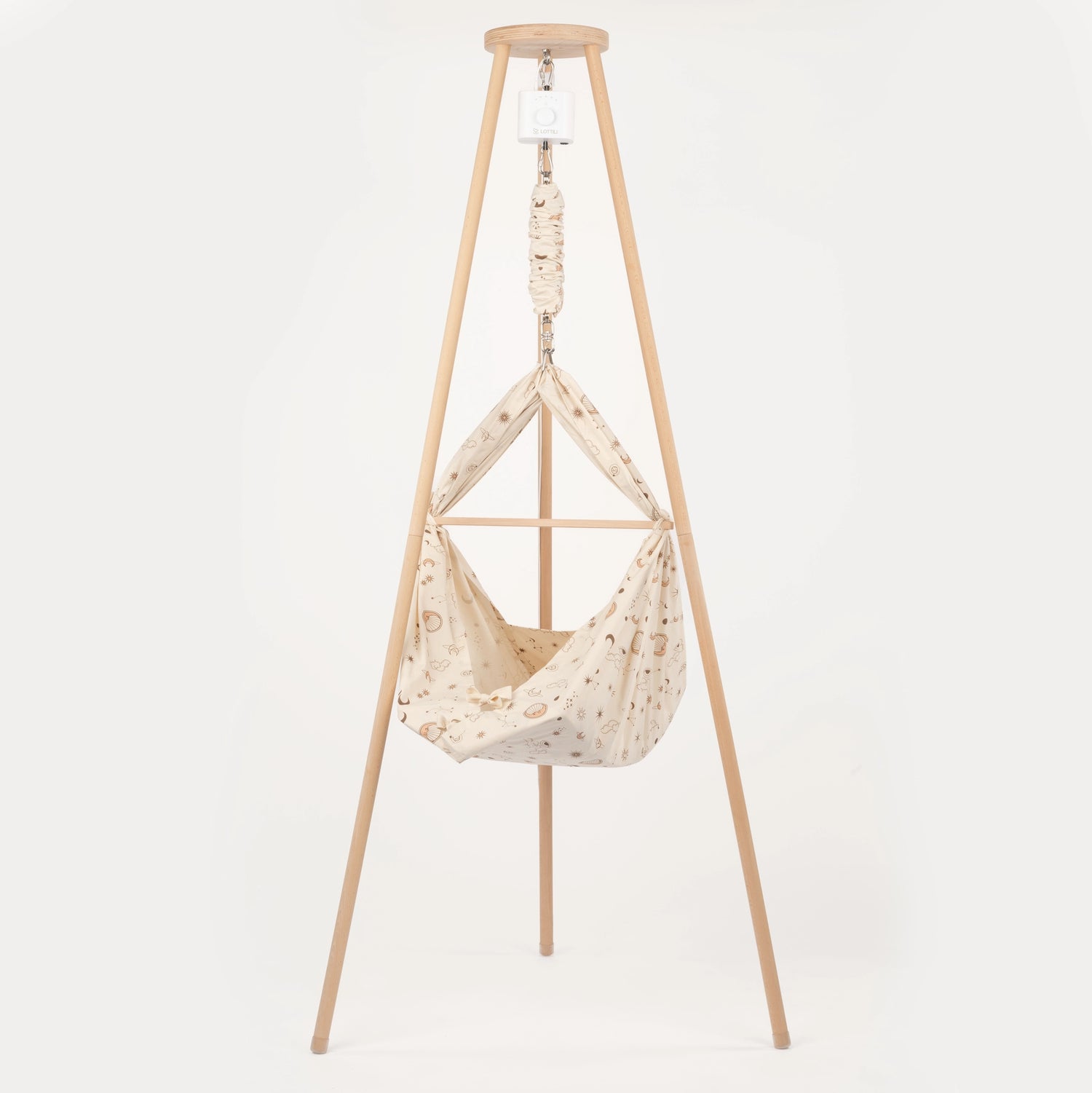
Lottili Das klassische Federwiegen Set fuer Federwiegen

The Baby Hammock Set

Sleep for your baby, time for you.

View the baby hammock

When the midday nap gets shorter

As children get older, they need a smaller amount of sleep spread across the day. Many two-year-olds still take a midday nap, while three-year-olds often only need quiet breaks. This transition can unsettle parents, especially if their child suddenly finds it hard to go to bed in the evening or starts waking up earlier at night.

A good rule of thumb: if your child seems content during the day and falls asleep more easily in the evening, it's fine to shorten the midday nap step by step or skip it. Differences of up to two hours are completely normal, because every child's need for sleep is different.

Bedtime: when children are really tired

The ideal bedtime is the wake-up time minus your child's individual sleep need. If a child regularly wakes up at 7 a.m. and needs around 10 hours of sleep, they should be in bed by about 9 p.m. at the latest. Some children take a little longer to fall asleep, so an earlier bedtime can make sense.

Besides set times, routines help: evening rituals such as reading aloud, listening to music or cuddling signal to your child that sleep time is coming. It's important that going to bed never feels like a punishment, but like a relaxing, safe end to the day.

Sleep hygiene and room temperature: how to set the stage for restful sleep

Good sleep hygiene supports good sleep and helps prevent restlessness at night. It includes:

  • regular times for going to sleep and getting up,

  • calming bedtime rituals,

  • a quiet, dark sleep environment,

  • a comfortable temperature in your child's bedroom.

The ideal room temperature is between 16 and 18 °C. Extreme temperatures in the bedroom can significantly reduce sleep quality. Make sure the bed is used only for sleeping, not for watching TV, playing games or roughhousing.

If your child finds it hard to settle down in the evening, gentle support such as a white noise sleep aid can also help. Steady, even sounds are similar to the familiar sounds babies knew in the shelter of the womb and have been shown to calm many babies.

The right place to sleep: safety and comfort

The environment is key to safe sleep. Experts recommend that babies sleep in the same room as their parents during the first year of life, known as room-sharing. This significantly lowers the risk of sudden infant death syndrome (SIDS).

Keep these basic rules in mind:

  • On the back: Always lay babies down on their back.

  • Baby sleeping bag instead of a blanket: reduces the risk of overheating and suffocation.

  • Smoke-free environment: secondhand smoke significantly increases the risk of SIDS.

  • A clear bed: no pillows, sheepskins, stuffed animals or bumpers.

Many parents say that a gentle rocking motion helps their baby fall asleep. For daytime naps, a baby hammock can help, especially during phases when babies only want to fall asleep in your arms. If you'd like to try one out, you can rent the baby hammock.

Sleep problems in babies and children

Temporary sleep problems are normal in childhood. They are often caused by growth spurts, teething or the sleep regressions mentioned earlier. It only counts as a true sleep disorder when the problems last for weeks and put a heavy strain on family life.

Typical signs:

  • taking more than 30 minutes to fall asleep on most evenings

  • frequent waking at night

  • excessive crying at night

  • noticeable tiredness or irritability during the day

In these cases, talk to your pediatrician. The Deutsche Gesellschaft für Kinder- und Jugendmedizin (German Society for Pediatric and Adolescent Medicine) points out that many sleep problems can be solved with routine, clear daily structures and an adapted environment, without the need for medication.
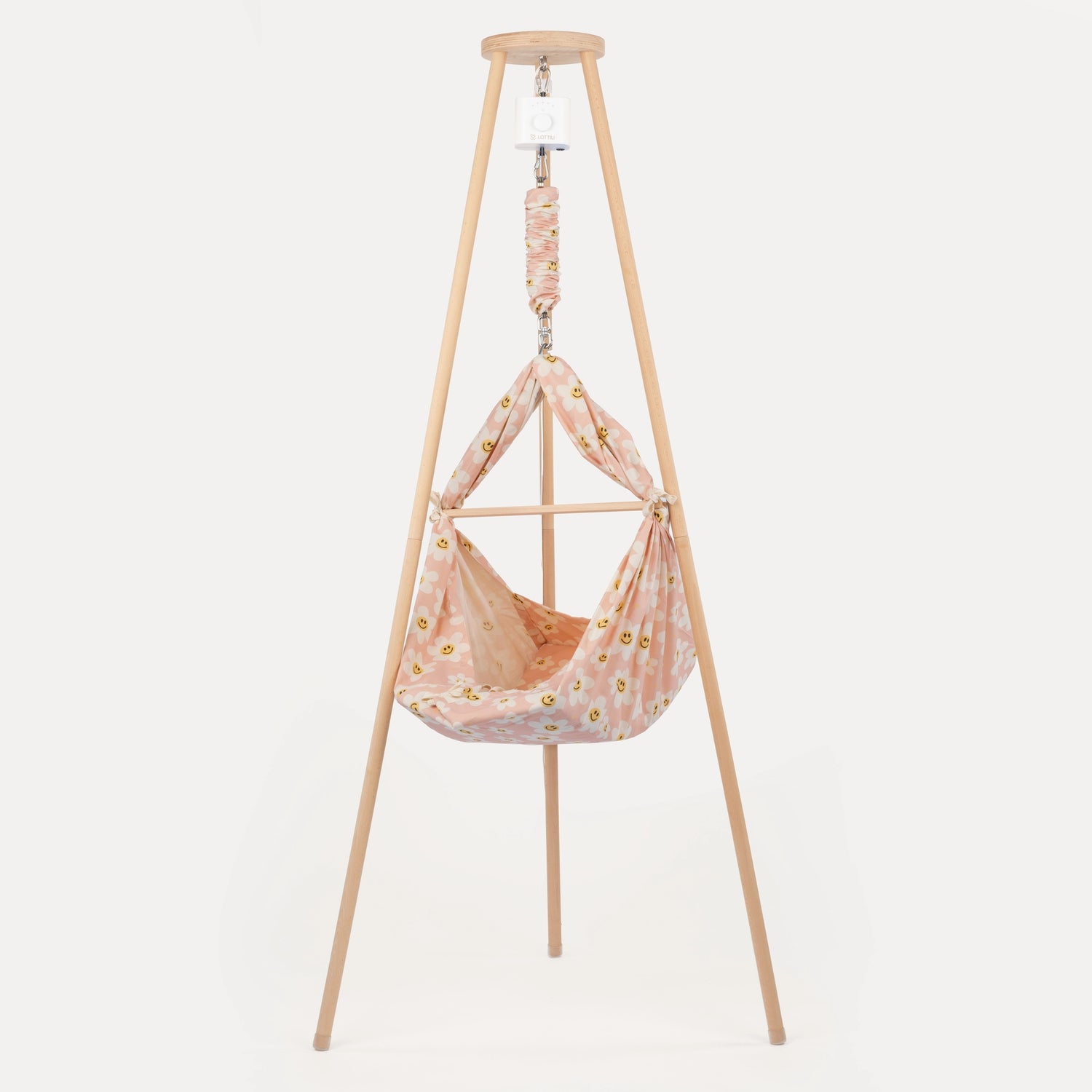
Lottili Das klassische Federwiegen Set fuer Federwiegen

The Baby Hammock Set to Rent

Sleep for your baby, time for you.

Our set is also available to rent. Maybe renting is right for you!

Rent the baby hammock

Sleep matters for parents too

When your baby sleeps well, it also takes pressure off you as parents. Tiredness and feeling overwhelmed can quickly affect the mood in the family. That's why parents are allowed to take breaks too, or to use aids that make falling asleep during the day easier, such as a baby hammock with motor if your child only falls asleep in motion. While your baby naps in it, you can catch your breath for a moment close by.

What research says about children's sleep

Numerous studies show that enough sleep in childhood goes hand in hand with better concentration, emotional stability and learning in the long term.
The American Academy of Sleep Medicine and the Journal of Clinical Sleep Medicine stress that lack of sleep can disrupt hormonal processes and affect development as early as preschool age.

Sleep problems in infants are also the subject of research: they are often linked to unbalanced wake-sleep cycles, which can be improved with steady routines and calming rituals. Listening to music or the soft hum of a white noise device can help reduce restlessness at night.

Healthy development through good sleep

In the long run, children benefit from stable sleep habits. The body releases growth hormones, the brain links new impressions and the immune system gets stronger. Sleep is important for healthy development, both physical and mental.

Children who sleep regularly and get enough sleep show:

  • more concentration and balance,

  • fewer mood swings,

  • a lower risk of being overweight,

  • faster recovery after stress.

For sleep to go well, parents should keep an eye on their child's need for sleep. If a child doesn't seem tired in the evening or is hard to wake in the morning, this often points to a sleep rhythm that doesn't fit the daily structure yet.

Baby and child sleep: the bottom line

Babies' and children's sleep keeps changing, from short sleep phases in infancy to stable nighttime routines by school age. It's important to look at each child individually: some need more sleep, others a little less.

With regular rituals, a pleasant environment and loving consistency, parents create the best conditions for restful nights. And if things do get difficult, a white noise sleep aid can make the transition into sleep easier.

A child is well rested when they wake up content and curious in the morning, and that is the best indicator of healthy development.

FAQ on baby and child sleep

Here are a few more answers to questions you might have about this topic

How much sleep does an infant need?

Newborns sleep an average of 16-18 hours a day. By six months, total sleep drops to about 14 hours, spread across daytime and nighttime sleep.

When do children stop taking a midday nap?

Between the ages of three and four. After that, many children only need quiet rest periods without sleeping.

When will my child sleep through the night?

"Sleeping through the night" means different things to different people. Medically, a stretch of 5-6 hours in a row is often already called sleeping through, even if your baby wakes up afterwards and may want to breastfeed or have a bottle.
Many babies can manage longer stretches of sleep from around 6 months, some much earlier, others later. Factors such as temperament, breastfeeding or formula, developmental leaps, teething, illness or changes in daily life have a big influence. Important:

  • It is normal for a child to still have regular nights with interruptions in the first year of life (and beyond).

  • What matters more than "sleeping through or not" is whether your child is developing well, seems alert and curious during the day, and whether you as a parent can get enough rest in the long run. If you're very exhausted, support from family, a sleep consultant or your pediatrician can help.

What helps with sleep problems in babies?

Consistent routines, a calm sleep environment and a regular daily rhythm help the most. If the problems persist, talk to your pediatrician.

When does a child's sleep get better?

In the first months of life, sleep is very restless and broken up into many short stretches. From around 4-6 months, many parents notice that sleep slowly becomes more structured: awake and sleep phases become clearer, and some babies manage longer stretches of sleep at night.

In their second year, many children then sleep more steadily overall: fewer night wakings, clearer routines, often one midday nap. Even so, phases of poor sleep (illness, teething, developmental leaps, changes in daily life) are completely normal. Sleep doesn't have to be “perfect.” What matters more is that you can see an overall positive trend over several weeks, and that your child seems mostly alert, curious and developing well for their age during the day.

What is the 2/3/4 rule?

The 2/3/4 rule is a rough guide to the gaps between daytime naps for some babies from around 4-6 months:

After waking up in the morning, your baby is awake for about 2 hours before getting tired again.

After this first nap, they can stay awake for about 3 hours.

After the second nap, it's about 4 hours until bedtime in the evening.

Example:

Up at 7 a.m., first nap around 9 a.m., second nap around 1 p.m., bedtime around 5-6 p.m.

Keep in mind: the 2/3/4 rule isn't a must, just a guide. Some babies need shorter awake times, others longer ones. What matters most is always your child's tiredness cues (yawning, staring into space, rubbing their eyes, restlessness), not the clock alone.

Phones, tablets and TV: not good for babies and toddlers?

For babies and toddlers, screens are first and foremost extra stimulation that puts a heavy load on the nervous system:

  • Fast images, sound and light can be overwhelming and contribute to overstimulation.

  • Blue light has a negative effect on the release of melatonin, the hormone that prepares the body for sleep.

  • Above all, children need real interaction, physical contact, language and free play to develop in a healthy way.

General recommendations therefore point in this direction:

  • Under 2 years, ideally no screen time.

  • For older children, short, age-appropriate media time, ideally with an adult watching too.

No more screens at least 1 hour before sleep, so the brain can settle down. If media are used now and then, calm content, dimmed light and clear limits make sense, and bedtime is not a good time for screens.

Your child doesn't want to go to bed yet, even though it's already bedtime?

Children "not wanting to go to bed yet" is very common, especially after an exciting day or when they feel they might miss out on something. What helps:

  • A predictable routine: A sequence that is always similar (dinner, getting washed, pajamas, a story, cuddles) tells the body: "Now it's time for sleep."

  • Winding down in time: Play that runs too late or gets too wild right before bed can wind children up, even when they are actually tired.

  • Clear, loving boundaries: Calm, consistent words ("It's bedtime now, we'll read one more book and then lie down") give a sense of security.

  • Check the time: Sometimes the planned bedtime is too early or too late. Moving it a little earlier or later by 15-30 minutes can make a big difference.

If your child regularly takes a very long time to fall asleep despite a routine, or gets extremely wound up in the evening, it can help to take a close look at the daily schedule (naps, active times, screen time) and adjust it in small steps if needed.

Your child can't fall asleep alone or refuses to go to bed in the evening?

Falling asleep alone is a skill that develops step by step. It isn't a duty that suddenly "has to work" at a certain age. Many children need the closeness of the people they trust for a long time to feel safe.

Things that can help:

  • Staying with your child as they fall asleep: Staying until your child is asleep isn't "wrong" as long as it works for you as a family.

  • Stepping back gradually: If you'd like your child to learn to fall asleep more independently, you can go in small steps, for example lying right next to them at first, later sitting on a chair in the room, then sitting in the doorway.

  • Rituals as anchors: Rituals that stay the same (a song, a story, a cuddly toy, certain words) give a sense of security and make the move from being awake to sleep easier.

  • No power struggles: The more pressure builds up ("You have to sleep on your own now!"), the more stress comes into play. A calm, understanding approach helps more in the long run.

If your child shows a lot of fear when falling asleep, panics, or if bedtime is very stressful for the whole family, support from a pediatrician or a family or sleep counselor can be a good idea.

Wouldn't it be better to let your child stay up longer until they're finally tired?

At first the idea sounds logical, but in practice "keeping them up too long" often leads to overtiredness:

  • Overtired children often seem wound up, fidgety or irritable, not sleepy and cuddly.

  • The body releases stress hormones such as cortisol, which make it harder to fall asleep and can lead to frequent waking during the night.

  • A bedtime that keeps changing or is very late makes it harder for the body to develop a stable sleep rhythm.

It usually helps more to spot tiredness cues early and support falling asleep within that window, instead of waiting until your child is "completely worn out". A steady framework (a similar bedtime, the same ritual) supports a healthy sleep-wake rhythm much better than the "stay awake until they drop" approach.

Own room, family bed or bedside sleeper: where should babies sleep?

The key points here are safety, closeness and your individual family situation:

  • For the first few months, the usual recommendation is that your baby sleeps in the same room as the parents, but on their own firm sleep surface (for example a bedside sleeper or a baby bed with bars).

  • This can make closeness at night easier (breastfeeding, feeding, comforting), and it is also viewed favorably for reasons that include preventing sudden infant death syndrome (SIDS).

  • A separate nursery is not essential. You can introduce it later, at your own pace, when it feels right for everyone.

  • Sharing a family bed can work if it is set up safely: a firm mattress, no thick blankets or pillows near your baby's face, no gap between mattresses, and no family bed if a parent smokes or has had alcohol or medication.

In the end, what counts is this: the sleeping arrangement should be safe, practical and feel right for you as a family. If you're unsure, your pediatrician or a specialist counselor is a good person to ask.

How can I tell my baby is tired?

Signs of tiredness can include:

  • Yawning, rubbing their eyes, staring into space

  • Restlessness, fussing, suddenly being sensitive to noise

  • Turning away from eye contact or toys

It helps to notice these signs early and then gently guide your baby toward sleep, instead of waiting until they are completely overtired. A "good window" is often the first clear signs of tiredness, not the moment your baby is already crying from exhaustion.

How many daytime naps are normal?

This varies a lot, but you can use these rough trends as a guide:

  • Newborns: lots of short sleep phases spread over 24 hours

  • 3-6 months: often 3-4 daytime naps

  • 6-12 months: usually 2-3 naps

  • 1-3 years: usually 1 midday nap

  • From around 3-4 years: many children no longer need a midday nap, but often still need quiet breaks

The exact number of naps matters less than whether your child seems content and balanced overall and is developing as expected for their age.

Does my child need a set bedtime ritual?

A bedtime ritual isn't a must, but in practice it's extremely helpful. It lets your child round off the day and switch over on the inside.

Typical elements can include:

  • brushing teeth together, washing, putting on pajamas

  • short steps that repeat (for example reading a book, singing a song, cuddling)

  • a calm setting with as little stimulation as possible

The key is repetition: when the routine is similar every evening, the brain links this sequence with "Now it's time for sleep", which can make falling asleep easier.

Is it normal that my baby only sleeps in my arms or while moving?

Young babies in particular first get to know the world through the movement and snugness of the womb. That's why many of them sleep best when they are carried, rocked or moved. At first this is completely normal and not a "mistake".

You can:

  • let your baby sleep in a wrap or baby carrier (following the safety guidelines)

  • gently rock them in your arms or go for a walk

  • during the day, use gentle aids such as a baby hammock that recreates the familiar rocking feeling

  • over time, carefully try moving from motion to a calmer way of falling asleep (for example, let your baby fall asleep in motion first, then let them keep sleeping lying down)

What matters is that you feel comfortable with the solution you choose and don't put pressure on yourself for your baby to "fall asleep alone in bed right away".

Should I wake my baby at night to breastfeed or bottle-feed?

In the first weeks, it's often important that babies feed regularly, at night too. Sometimes pediatricians or midwives advise not letting babies sleep too long at a stretch at first, so they gain enough weight.

Once your baby is thriving and a professional has confirmed that all is well, you can often let them sleep as long as they need at night and only feed them when they wake and ask for it. If you're unsure about your individual situation (weight gain, jaundice, feeding habits), always talk to your midwife or pediatrician.

Does it help to "let my child cry it out" so they sleep better?

For babies and toddlers, crying is a way of communicating: it shows that they need something (closeness, security, comfort, a change in the situation).

Long stretches of crying with no response can raise your child's stress level and weaken their sense of security. Waiting briefly to see whether your child settles on their own is fine. What matters is that, overall, your child experiences this: "When I need help, someone is there for me."

If you're looking for ways as a family to make sleep more relaxed, gentle, attachment-based approaches and, if needed, expert sleep counseling help far more than strict "crying it out".

What can you do when illness, teething or developmental leaps throw sleep off track?

In phases like these, it's completely normal for sleep to get worse for a while. What helps:

  • Allowing more closeness and flexibility (for example comforting more often, more physical contact, sometimes letting your baby fall asleep in your arms)

  • Keeping the day as calm as possible, without extra strain

  • Slowly going back to your usual routines once the difficult phase is over

If you're worried, or if your child is in a lot of pain or shows unusual symptoms, always have a pediatrician take a look.

Lottili Das klassische Federwiegen Set fuer Federwiegen

The baby hammock for daytime naps

You set the baby hammock swinging once by hand, and the motor picks up exactly that rhythm. It's designed for babies from 3 to 12 kg and their daytime naps while you stay close by.